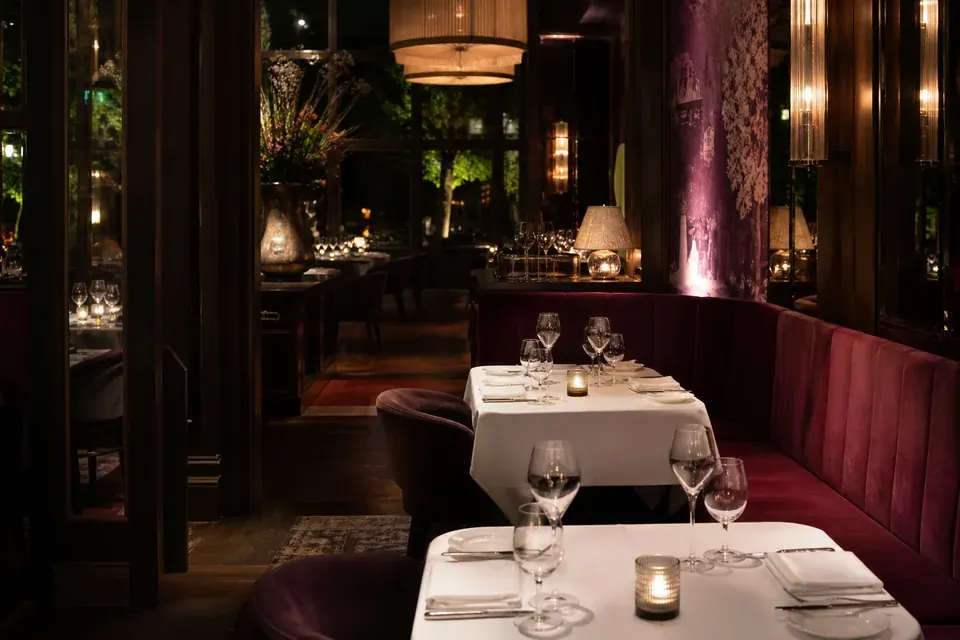
How smart seating fits more covers into every shift
Smart seating places each party on the right table so you turn more covers without burying the kitchen.
The host stand is the busiest place in the building. Bookings, walk-ins, a late party, a four-top that wants to become a six. Plan the room by hand and you end up with empty tables you cannot fill and a kitchen buried under a 7:30 wall.
Smart seating takes that weight off the host. It reads the room and the night, then puts each party at the right table at the right time. Cornell research found the right mix of tables can lift peak-hour revenue by 30 to 40 percent.
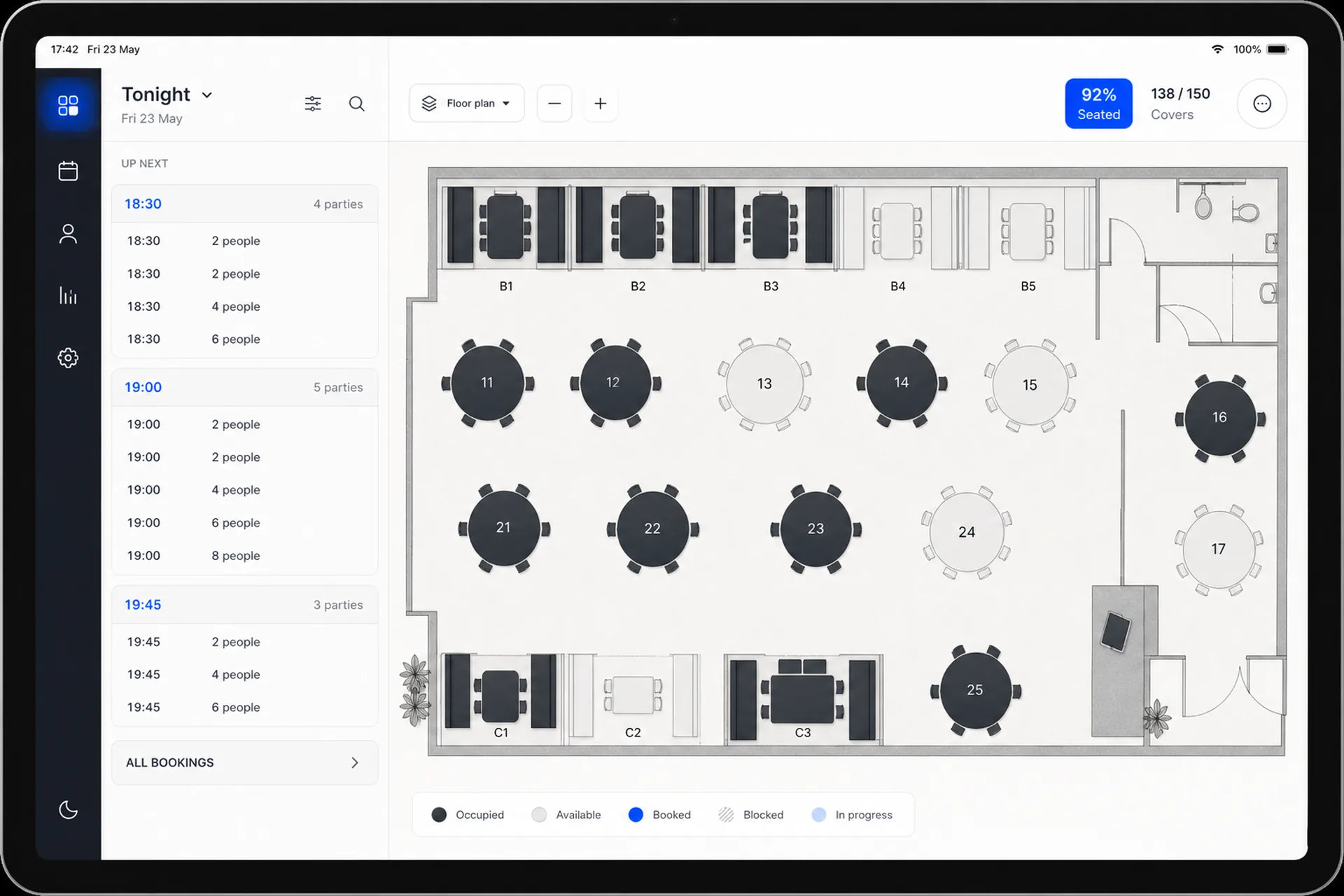
What smart seating actually does
Apero arranges your floor plan as bookings come in. It looks at party size, how long a table usually takes to turn, and what is already booked, then it places each reservation where it earns the most without overloading the kitchen.
- It matches party size to the right table, so a couple does not sit at a six-top your next large group needed.
- It spaces arrivals so the kitchen gets a steady flow instead of ten tickets at once.
- It respects the shape of your room, your sections, your pace, and the rules you already follow.
The result is more parties through the door with the same number of tables, and a service that feels calm instead of swamped.
The system fits your room
Every dining room has its own logic. The two-tops by the window that turn fast. The back section you open when the night fills. Smart seating works inside those rules instead of flattening them. You define how the room works. The floor plan follows as the night changes.
Apero scores every free table against the party and the night, then picks the best option. Size fit. Section balance, so guests spread instead of stacking on one server. Turn margin, so each table has a comfortable gap before the next booking. Guest preferences: a window, a booth, the patio. Fill order, so the tables you want used first get used first.
For large parties it combines tables and it knows the real seat count. Two four-tops pushed together seat six, not eight, because the middle chairs disappear. You set that loss per join in the floor-plan editor.
Tune it to how you work
Start from two postures. Maximize covers for a busy Friday. Maximize comfort for a quieter night. Lock a VIP table so the algorithm never moves it, or lock it halfway so it moves only if a clearly better plan appears. Before open, Apero can arrange the whole night at once. During service it re-arranges upcoming bookings, never guests already seated, when a cancellation opens a hole.
Schedule a demo and we will run your room, your sections, and a Friday night through Apero.
The Apero team
The Apero team builds a booking platform and a 24/7 AI receptionist that help restaurants across Canada grow.
Keep reading
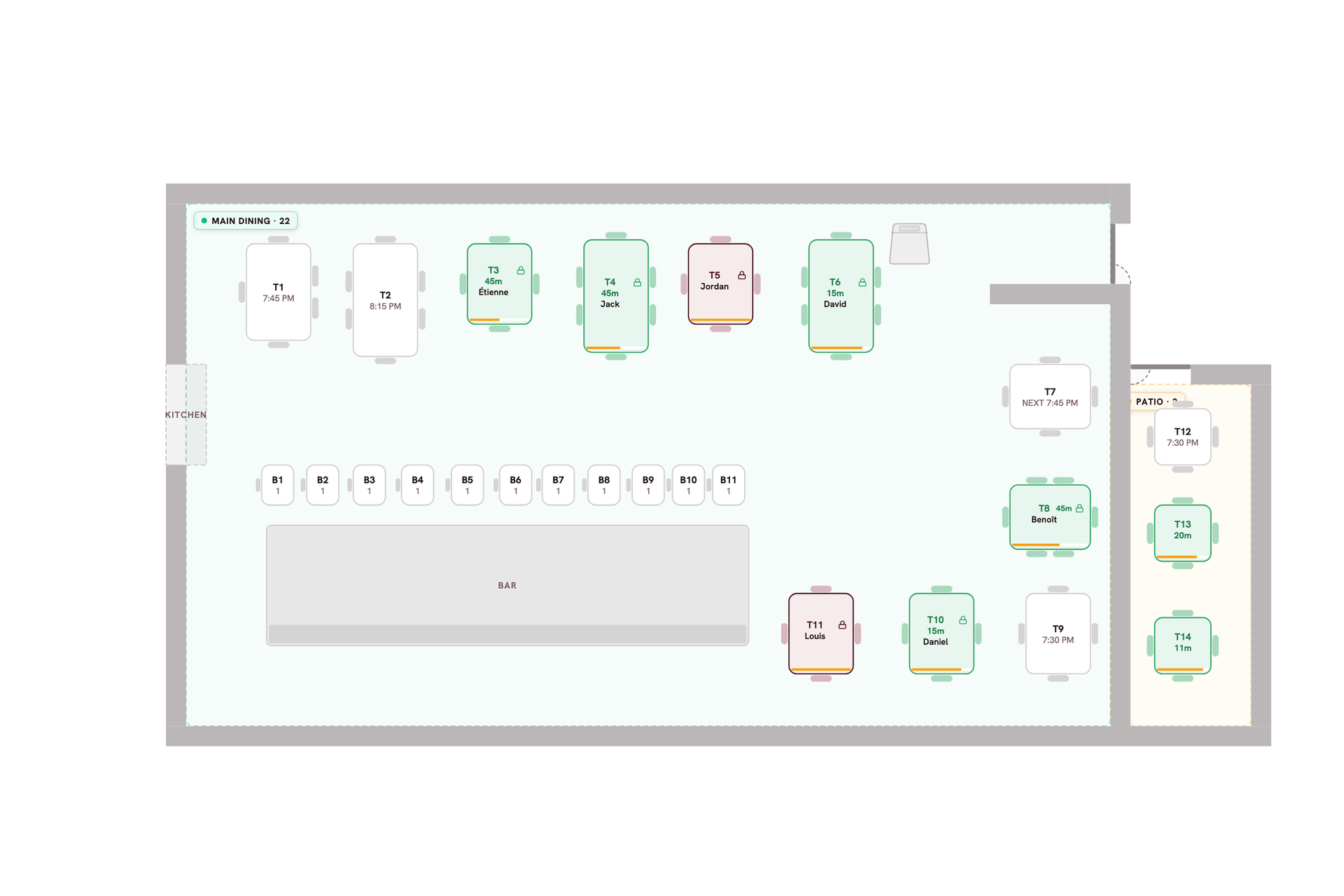
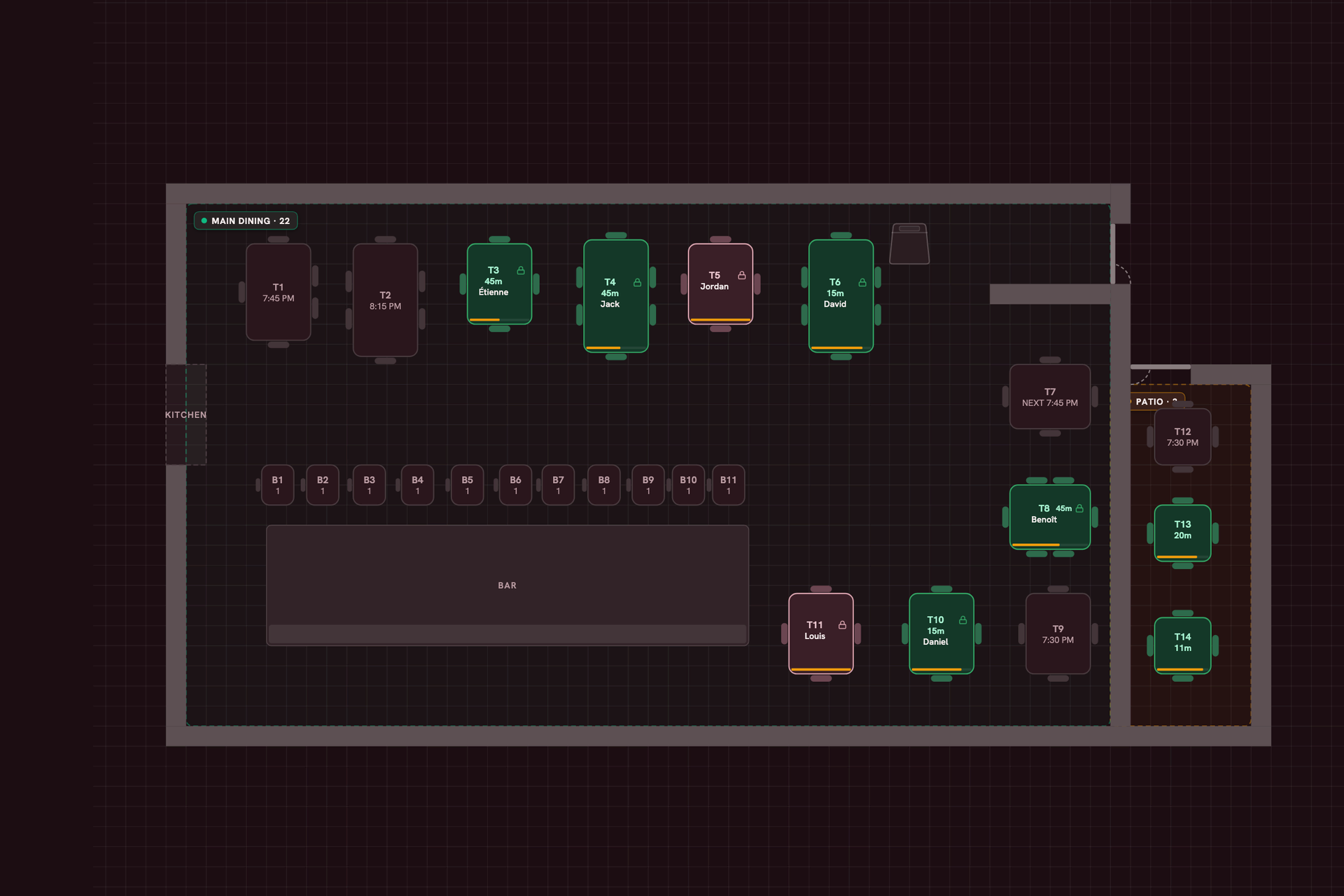
One screen at the host stand
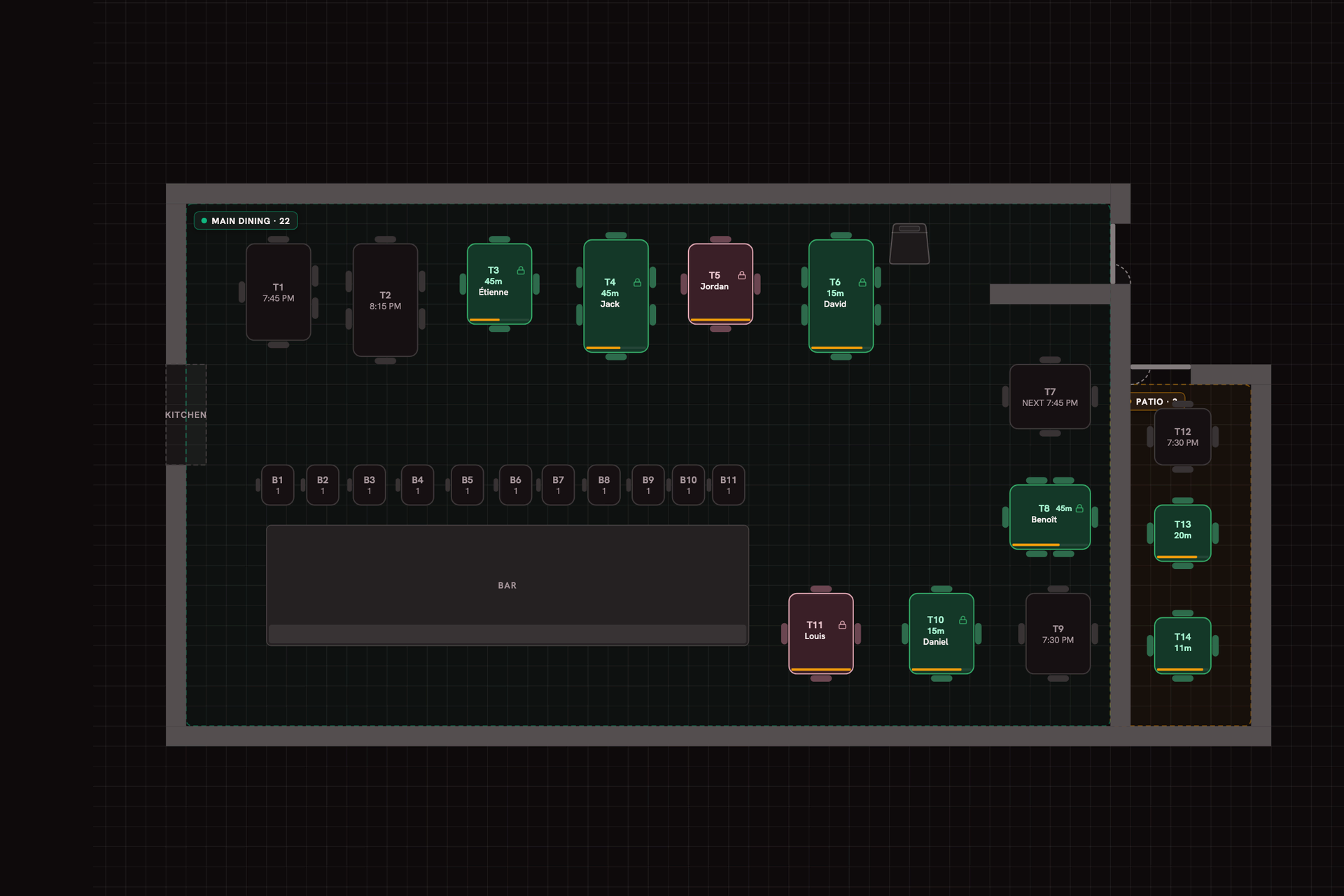
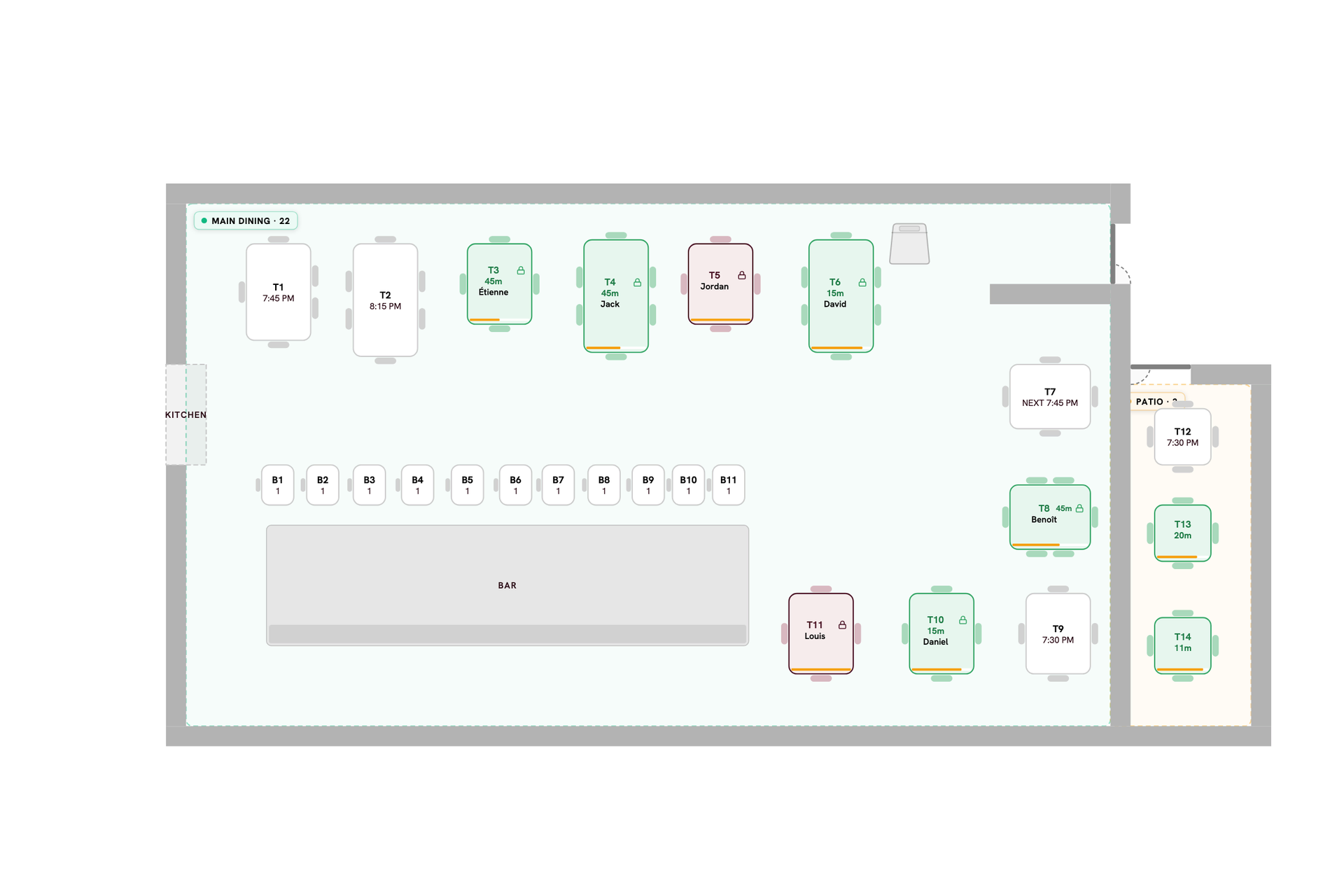
The night runs from the tablet. Floor plan, timeline, and every booking on one screen, built for a thumb, not a back office.
Read
AI phone answering for restaurants: what to ask
What an AI receptionist does on a real restaurant call, when it hands over to staff, and the questions to ask any vendor before you switch one on.
ReadHow to choose a restaurant reservation system
Five questions that decide it: cost per cover or per location, guest data, phone bookings, French, and contract length.
ReadPicture it in your own room.
Book a demo to see what this guide looks like in Apero, for a room like yours.